

Proteins

Fishmeal
Fishmeal is (usually) ground, dried fish or fish by-products. In the feed industry, it is used as a highly concentrated source of protein and nutrients with a strong taste and smell (attraction). It has been widely used in aquaculture for decades because it often ensures good growth, feed intake, and feed efficiency. The basic production steps are roughly: cooking ~ pressing (removing oil/water) ~ evaporation/drying ~ grinding.
Fishmeal
A. Amino acid profile (building blocks of protein)
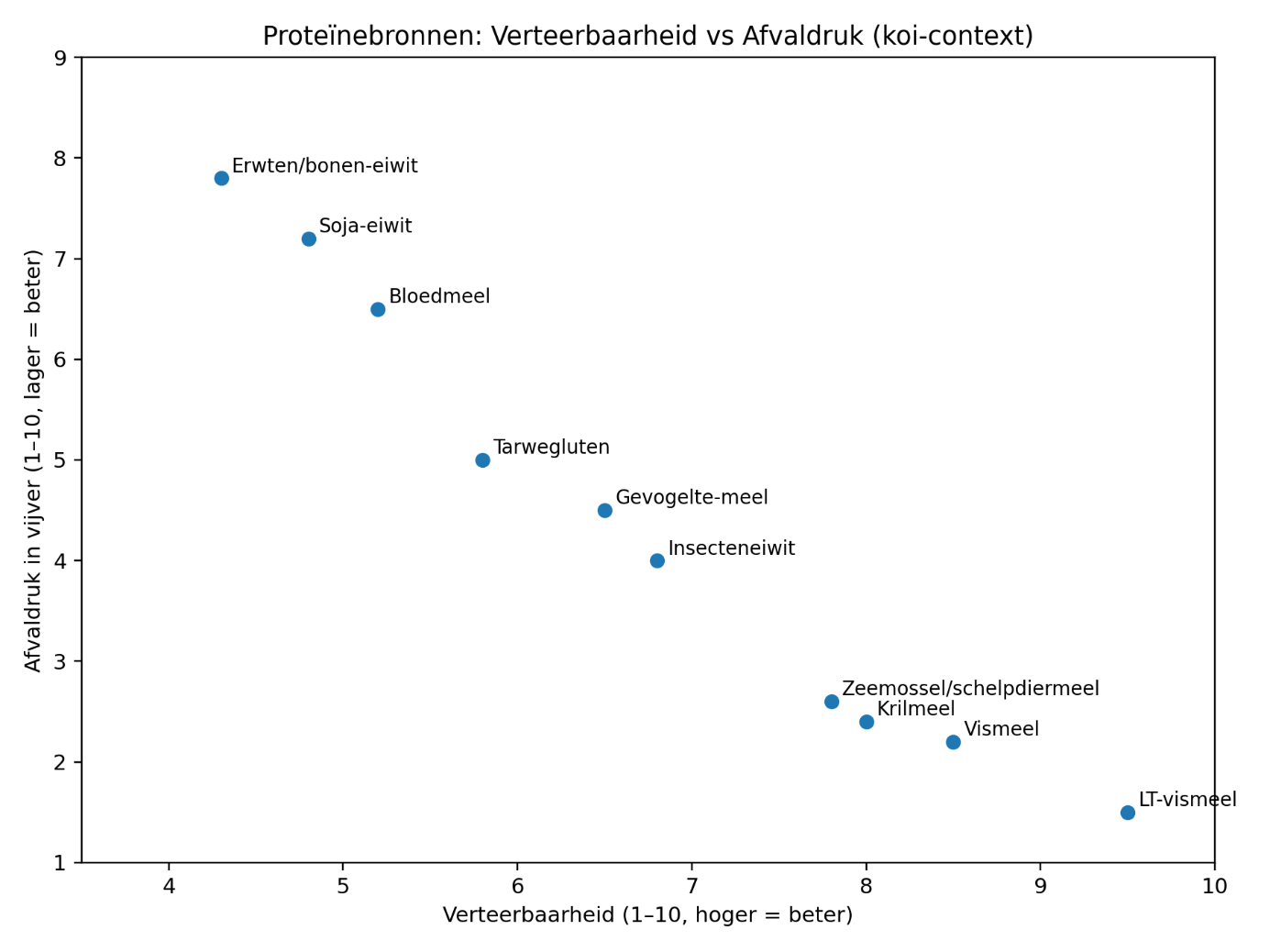
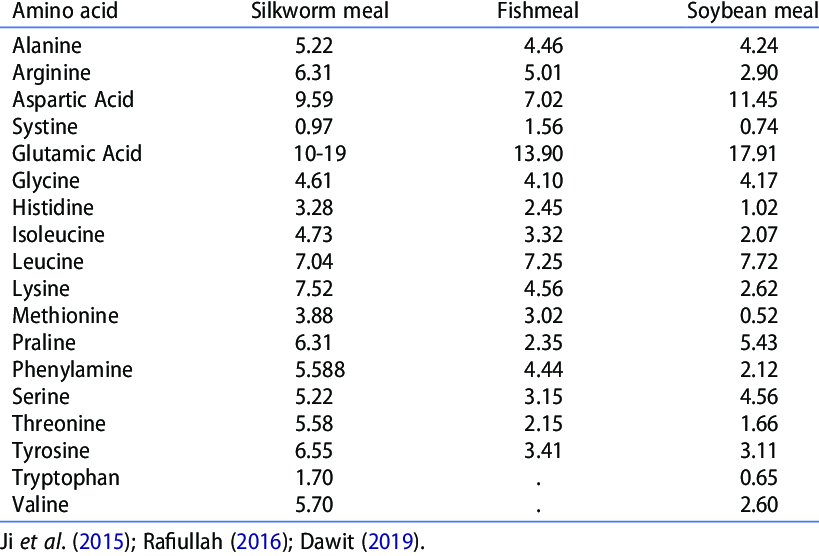
Fish need essential amino acids (including lysine and methionine). Fishmeal often aligns better with what fish need than many plant-based sources, which more often have “limiting” amino acids. Specifically, the aforementioned amino acids lysine and methionine are often insufficiently present in plant proteins (see the overview below). If these amino acids are not extra added to the koi food recipe, the proteins primarily become a source of pollution.
B. High digestibility and palatability
Fishmeal is known for high digestibility and palatability (koi usually eat it greedily). This can lead to better feed efficiency: more growth/maintenance per gram of food.
C. Fewer “anti-nutritional factors” (ANFs)
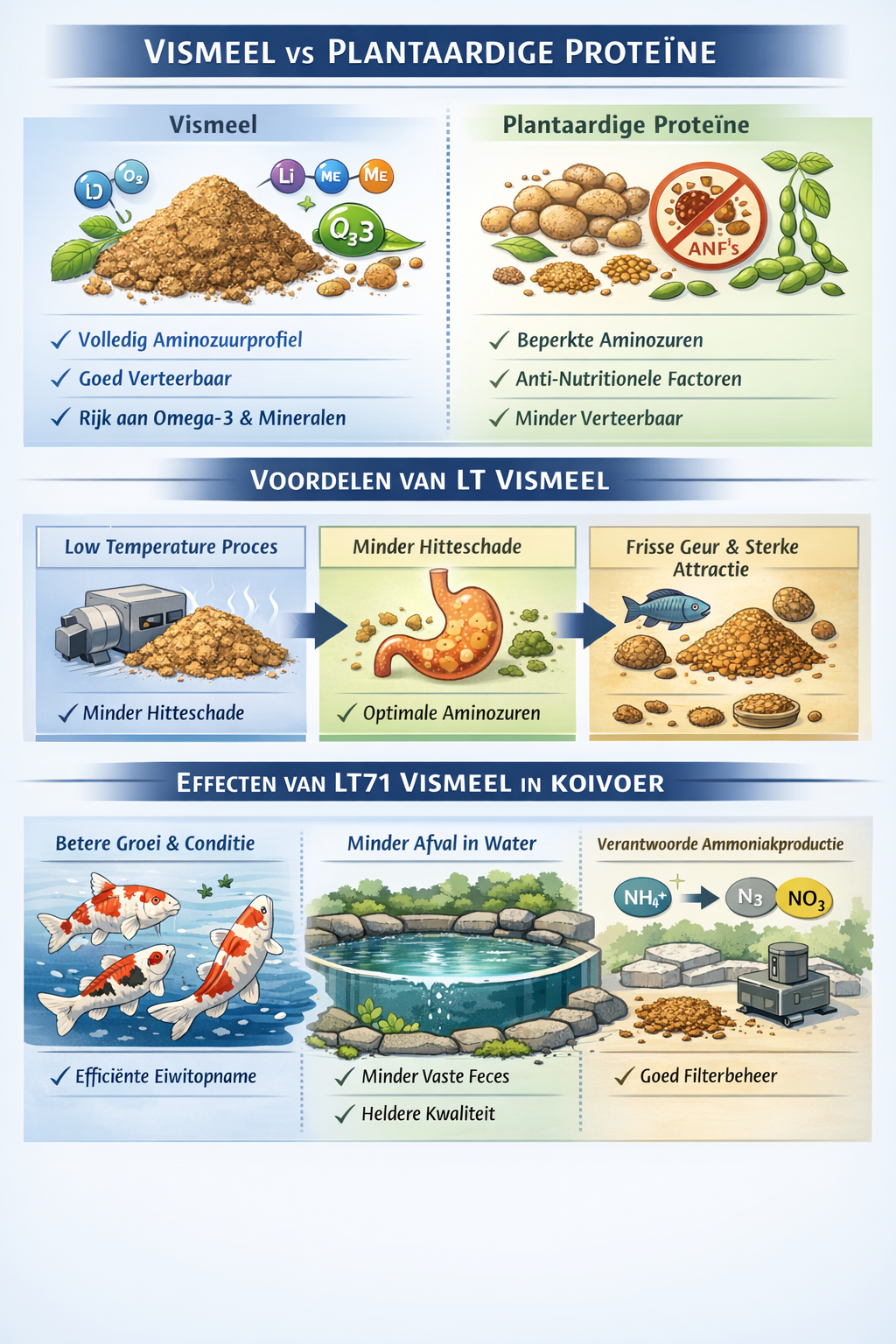
Many plant-based protein sources (such as soy and certain seeds) naturally contain ANFs (e.g., trypsin inhibitors, saponins, lectins) and/or more fiber and phytic acid, which can inhibit digestion and mineral absorption if not processed or dosed correctly. Fishmeal generally has much less of this problem.
D. Micronutrient package
In addition to protein, fishmeal also provides minerals, vitamins, and marine fatty acids.
What is the advantage of "LT" fishmeal?
LT = Low Temperature: the meal is dried more gently/at a lower temperature (often with indirect heat) than standard fishmeal. The goal is less “heat damage” to the protein.
In general, this means:
- Less denaturation / less Maillard damage ~ amino acids remain more “available”
- Better amino acid digestibility
- Often a “fresher” smell and better attraction, because certain soluble components are better preserved
If LT fishmeal is truly of high quality (good raw material + mild process), the practical effects are:
- Better growth/condition with the same amount of food
Due to better digestibility and amino acid availability, the koi can absorb more “usable” protein. This supports:
- Growth (especially in young koi)
- Muscle building/recovery
- General condition
- Better feed intake (more enthusiastic eating)
Due to flavorings and soluble marine components, LT fishmeal is often highly attractive.
- Potentially better support for resistance (indirectly)
Not “magic”, but: if nutrition is better utilized and the amino acid/micronutrient profile is correct, it significantly supports physiological functioning.
Fishmeal
This is the part that koi keepers notice the most. Two opposing forces:
- Better digestibility = less waste (positive)
If a protein source digests better, you generally get:
- Less feces (less solid pollution)
- Less “fine dust” in the water
- Relatively fewer nutrients entering the filter unused
In practice, this often helps to keep the water “cleaner” at the same feeding level.
- Protein remains protein: nitrogen → ammonia (neutral/negative)
What koi don’t use for growth/maintenance is broken down. This releases nitrogen, which enters the water through the gills as ammonia (NH3/NH4⁺). So:
- Feeding more = more ammonia production, regardless of whether it’s fish or plant protein.
- The advantage of high-quality fishmeal lies mainly in efficiency: you often need less food for the same result.
- A complete amino acid profile
- High bioavailability
- Excellent digestibility
- Natural attraction for koi
These properties make fishmeal superior to exclusively plant-based protein sources.
The power of LT71 fishmeal
High-quality nutrition starts with the right protein source.
At KiGen, nutrient quality and efficiency are central. Koi are biologically designed to optimally utilize animal proteins. That’s why fishmeal forms the core of our feed composition.
Within the KiGen collection, Miori is a special exception. This is the only food in which fishmeal is combined with carefully selected poultry meal. The result? An excellently balanced food that not only delivers top performance but is also very attractively priced for the serious hobbyist.
With many common feed brands, this composition would effortlessly be positioned as high-end food, while in the KiGen collection, it is the entry-level food.
KiGen uses LT71 fishmeal as the primary protein source in all other koi food. Additionally, KiGen avoids the use of soy and other plant proteins as much as possible, which are known for their lower digestibility.
As is also clear in the table below, poultry meal is significantly more digestible than soybean meal. This means more efficient nutrient absorption, less waste, and ultimately a healthier, more vital fish.